Friday, November 8, 2013
We brush past an amazing hidden world
We live in a commercial, western world which encourages us to put ourselves forward and get attention. This is understandable when you consider that businesses need customers so that employees can be paid, so that families can comfortably earn a wage they need to survive. But just because that's the way we've been brought up to think things have to be, I've been wondering if it's necessarily the way the world was designed to operate.
A fair bit of photography has been taking place around our house. When we were up in Cairns, my nephew and my daughter both bought themselves good quality Nikon cameras. We've never owned anything with such a decent zoom lens before, and I've been enjoying the close-ups.
On the train back from Kuranda to Cairns, we were looking down at the spectacular Barron Falls and noticed a walking group standing beside the edge. Emma decided to zoom in on them with her camera to get a closer look at what they were doing, and to her shock, one fellow unzipped his fly and started to relieve himself over the edge of the waterfall. Her eyes were popping out of her head. "It's the guy in the yellow t-shirt!" Even though he was apparently still flowing, they all looked like ants to me. Being able to use that camera to pry into things not easily seen with the human eye has its moments of surprise.
On that same ride, a plain looking little bird on a distant sign post turned out to be a pretty kingfisher with delicate shades of blue. We'd never have realised it. Since we've been home in Adelaide, I've continued to be surprised at fine detail we usually miss. The shaggy wings of a close-up little moth are just like Mr Snuffleupagus from Sesame Street, or some sort of fringed garment. A tiny bug on the side of the guinea pig hutch turns out to have amazing detail in each of his wings, finer than any pencil point could draw. It fills me with awe at how delicately and wonderfully crafted the details of creation are, yet we so often breeze past without noticing.
Funnily enough, it's helped me put my writing in perspective. The same probably goes for you, whatever it is you do. If God gets his fine craftsmanship and breath-taking detail brushed past every day, then humans doing creative things don't have to worry when the same thing happens to us. Creativity doesn't have to be admired. That's not its main purpose, whatever we've been brainwashed to think. It's there for its own sake, and if anyone does get a bit of a 'wow' when they get a glimpse into secret places, that's a bonus.
For one of his recent birthdays, I took my youngest son and his sister down to the city to visit the museum. There had been school excursions getting hands-on lectures from a group of scientists, and we were lucky enough to arrive at the tail end of a presentation. As the school kids were filing out, one of the demonstrators was at a loose end. He invited my kids to come over and pick tiny particles out of a mound of dirt with tweezers. It turned out to contain lots of hidden secrets.
As Emma or Blake pulled up anything a little bigger than a normal speck of dust, he'd magnify it for them and say something like, "That is the back knee joint of a tiny gnat," or "That's the shoulder socket of an ancient grasshopper," or, "That's part of a marsupial's toe nail." They had him all to themselves for about half an hour.
I'm reminded of my characters, Brooke and Aidan, in "The Greenfield Legacy", the novel I worked on with three other authors. In one of my sections, Brooke tells Aidan about seeing a flower blooming on top of a lonely hill where people rarely go, and that she found herself wondering what purpose such extravagance could serve, to which he replies, "Well, you saw it."
The world is extravagant like that. On our holiday, Blake and I went on a glass bottom boat. It's a vividly colourful, vibrant world down there, but it's usually hidden from human view. Clown fish and turtles were just doing their usual thing, not knowing that several people were getting a peep into their secret world. I'm also reminded of pregnancy ultrasounds, when babies are just wriggling around, doing whatever it is they do at that stage of their lives, oblivious to the fact that they are being observed, and people are saying, "Look at his dear little fingers."
As I said, I don't necessarily think the world was designed for people to be thrusting themselves into the limelight, but we've felt we had to make it that way. I'll keep encouraging the kids to take photos, watching nature documentaries and work on their own creatives pursuits as I do the same. As it is such an incredibly detailed world, it's a shame to live our lives not delving into it and finding out more.
All photos were taken by Emma with her new camera.
Friday, October 18, 2013
That we may have Mount Everest syndrome
I was studying this huge mountain with my younger son. It's so impressive, being the world's tallest, at 8848 metres high. Apparently it still grows by about 0.25 inches each year, even at 60 million years old. It was first identified by a British survey team lead by George Everest in 1841, but not until 1953 did anyone manage to reach the summit. It was achieved by Sir Edmund Hillary from New Zealand and Tenzing Norgay, a Sherpa guide, making them instantly famous.
I applaud Junko Tabei, the first female to reach the top, not to mention Miura Yiuchiro, the oldest person to reach the top, aged 80, just last year in May 2013. I'm about half that age and just hiking the hills around home gets me huffing and puffing. Flinders Ranges' Mount Remarkable was almost too much for me, at 960 metres. Over time, thousands of people have tried to reach the top of Everest, and many nameless folk have died making the attempt, in the name of thrill seeking or notoriety. My nephew's karate sensei spent some of these last holidays climbing part of it. Even though he has a fitness level of an Olympic athlete, he didn't even attempt to make it all the way up. He told them all stories about the thinness of the atmosphere, and the many stops they would make just to get their breath back and conquer that altitude sickness. Something about a challenge of that magnitude appeals to the adventurous streak that lies buried in all of us, some deeper than others.
Yet it would seem that, from space, it is a different story. From a vantage point of that magnitude, Mount Everest is merely part and parcel of the crust of the earth. In fact, it was even surprisingly difficult to single out. Russian cosmonaut, Valentin Lebedev, said, "How many people dream of conquering Everest so they can look down from it, yet for us up above, it was difficult to locate."
This God's eye perspective, as it were, instantly made me feel peaceful, although I had to think about it to figure out why. Finally, I got it. It's all to do with the fact that it is we humans who label things with significance and importance, by deeming them big or impressive from our vantage point. As it's not at all the same for God, we needn't worry about buying into all that.
We make Everests out of many things. Humans are those who spread the illusion that some lines of work are way more illustrious than others, and that achieving celebrity-hood or stardom in some area must be the pinnacle. I now like to think that from a lofty enough heavenly perspective, all the good we do just becomes part of the earth's fabric. That means we don't really have to bust our boilers, burst our blood vessels and strain our Type A personalities to impress the people walking around down here, who share our limited focus.
I imagine some member of the angelic host from way above whose vantage point is more like that of Lebedev and his fellow astronauts, saying, "What Mother Teresa and Billy Graham have done is wonderful, but it's just part of the fabric of what love-driven servants are doing everywhere. Look at Jane Doe, looking after her sick mother and working hard as a single parent to support her son through college. Or Joe Blogs the bus driver, sticking to road rules and greeting all his passengers cheerfully, day after day. It's all one and the same, and we love it."
If we've ever been afraid of never hearing, "Well done, good and faithful servant," thinking our work is too little or measly to justify the space we take, it might be time to get over our Mount Everest syndrome. When I finish writing this blog post, I'm going to go and clean my kitchen, take my young son for a night walk, then before long I'll be hopping in the car to pick my daughter up from youth group, about 20 minutes drive away. I'll have to remind myself that it's all adding to crust of love-driven deeds that makes the earth a great place to live, even if it's not Mount Everest.
Monday, October 14, 2013
We really should consider the birds
Emma and Blake at Wildlife Habitat, Port Douglas, with a pair of tawny frogmouths.
I have to add this albino kookaburra from the Zoom Wildlife Dome, Cairns. He was beautiful.
Two members of our household have been interested in birdwatching recently; my nephew, Jarrad, and my daughter, Emma. They both bought new cameras to help them zoom in really close on their subjects. And next door to our housing estate is a wetlands area which is a haven for birdwatchers. All this probably helped spike my interest. I've just finished reading an interesting book called, "Consider the Birds" by Debbie Blue, and I've been mulling over some of her stories and research. Not only have different birds stood as symbols of different things for aeons, but I've been thinking about how the state of human beings and our priorities may be reflected in the health of our bird populations. Most of the facts I cite here are from that book.
Back in the 1960s, America almost threatened one of its prized emblems, the bald eagle, with extinction. It was all because of the widespread use of the pesticide DDT to spray crops. It seems one of the side effects impacted the eagle. It interfered with their ability to process calcium. As a result, their egg shells were so frail that they'd crack when the parents sat on them to keep them warm. The situation got so serious that there were only 417 recorded nesting pairs across the nation in 1963. Although DDT has long since been banned, it's only been 2007 since the bald eagle has been removed from the endangered species list.
More recently, the massive oil spill off the American coast from the Deepwater Horizon rig had devastating effects on the pelican population. It unleashed more than 170 million gallons of crude oil straight into the Gulf of Mexico. As a result, pelicans were drenched and immobilised, unable to try to stretch their wings without agony. This sort of 'accident' is not OK. It's far more than just a simple "Ooops."
In Genesis, man was given the mandate to be a good steward of that which was entrusted to him. It's both heartbreaking and scary when you consider that birds, which have been linked in their genetic makeup to dinosaurs, with their ancient history on earth, may be threatened by ignorant and thoughtless human activity within a decade, a few years, or maybe even a day in the case of massive oil spills. It would seem that humans are definitely the most dangerous breed of mammals. Some of us Aussies may be old enough to remember our TV personality, Derryn Hinch, shaking his head sadly in the '80s and saying, "We treat this planet as if it belongs to someone else."
I've heard people say, "What's a few bird species, anyway? People are more important than birds. I don't get environmentalists. Let's concentrate on making living conditions better for human beings." And some even consider certain birds a type of pest, and that they are doing the world a favour by getting rid of them. In the light of these further stories in the book, I consider this sort of thinking shortsighted to say the least.
When you look at vultures, you may see creepy-looking opportunists, hovering around to take their bit of flesh without any choosiness at all. They were the subjects of horror stories which gave me the heebie-jeebies. Yet at one time in India, Nepal and Pakistan, a painkiller named diclofenac began to be fed to lifestock from a pharmaceutical company. It turned out to be poisonous to the vultures which fed on their carcasses, and as a result, tens of millions of vultures died from kidney failure.
What people didn't expect is the havoc to the environment which resulted from the loss of the vulture. Festering cattle haboured anthrax, and there were surges of rabies due to an increase in the population of feral dogs, which were thriving without vultures around to compete for the food sources. Harmful diseases began to spread everywhere, and as you'd expect, once humans were directly affected, it became a different story. The drug was banned to save the vultures.
Even common little grey sparrows have an important role. (My daughter, Emma, loves these, by the way. Their ordinariness seems to be endearing to her.) In China, Mao Tse-Tung encouraged people to eradicate the tree sparrow, in his "Four Pests" campaign. The other three were rats, flies and mosquitoes. So the little bird was brought to the brink of extinction by over-zealous followers, and suddenly locusts and other crop-eating insects flourished, which were definitely far more of a pest. There were no sparrows to eat them, so they were free to decimate human crops. The resulting crop loss contributed to the Great Famine which killed more than 30 million people. How amazing, that a disaster of this immensity can be linked to the loss of a drab little grey bird.
It seems Mao ended up taking the sparrow off his hit-list, to replace it with the bedbug.
This sort of story speaks to me. We can apply it further than the birds. We should respect ourselves. Even when we don't seem to be contributing much, (or are even called repulsive or a nuisance in some cases), we are really serving a grand purpose in the ordinary roles we have, of caring for our families, keeping things clean and offering kind words to others now and then. Nature is designed by a wise creator. We meddle with it at our peril. These birds obviously served an important ecological function which was discovered and appreciated almost too late.
An internet quote going around tells us, "A man is judged by the way he treats those who can do nothing for him." And in the case of the birds, it turned out to prove that they really were doing something for mankind after all. It all suggests that we shouldn't underestimate any creature. St Francis of Assisi went around calling the bird and animal kingdom his brothers and sisters. I think he was onto something.
Not long ago, I was walking around my neighbourhood and witnessed an act of heroism. A poor, noisy lorikeet was getting pounced on by a cat. The cat had him, flapping around in his jaws, and then another lorikeet swooped down from a tree and zoomed straight for the side of the cat's head. The action saved his squawking friend, because the cat got surprised, loosened its grip, and both birds flew away.
Those who talk about the 'dumb' beasts may need to re-think their definition of intelligence. Any creature who migrates for miles with their own wing power, without the benefit of maps or compasses, and sits patiently on their nests until the job is done deserves a bit of respect.
One night, my son, Blake, and I were walking in the dark and weren't far from our house when we saw a huge tawny frogmouth sitting on a short pole. These are Aussie birds which look a bit like owls and also a bit like a tree trunk. It let us walk right to it and just stayed, giving us this wise sort of scrutiny from its big eyes. We were even talking to it, wishing it would talk back. I couldn't help wondering what it was thinking, and if it was there as we passed for any deeper reason.
It looked so settled and peaceful, I said, "Would you mind staying there for a moment, while we go home and get our camera? It'll only take about two minutes." We hurried off but when we got back, he was gone. We've never seen a tawny frogmouth out in our part of suburbia again, let alone such a bold one, and I can't help wondering what he was all about.
I have to add this albino kookaburra from the Zoom Wildlife Dome, Cairns. He was beautiful.
Two members of our household have been interested in birdwatching recently; my nephew, Jarrad, and my daughter, Emma. They both bought new cameras to help them zoom in really close on their subjects. And next door to our housing estate is a wetlands area which is a haven for birdwatchers. All this probably helped spike my interest. I've just finished reading an interesting book called, "Consider the Birds" by Debbie Blue, and I've been mulling over some of her stories and research. Not only have different birds stood as symbols of different things for aeons, but I've been thinking about how the state of human beings and our priorities may be reflected in the health of our bird populations. Most of the facts I cite here are from that book.
Back in the 1960s, America almost threatened one of its prized emblems, the bald eagle, with extinction. It was all because of the widespread use of the pesticide DDT to spray crops. It seems one of the side effects impacted the eagle. It interfered with their ability to process calcium. As a result, their egg shells were so frail that they'd crack when the parents sat on them to keep them warm. The situation got so serious that there were only 417 recorded nesting pairs across the nation in 1963. Although DDT has long since been banned, it's only been 2007 since the bald eagle has been removed from the endangered species list.
More recently, the massive oil spill off the American coast from the Deepwater Horizon rig had devastating effects on the pelican population. It unleashed more than 170 million gallons of crude oil straight into the Gulf of Mexico. As a result, pelicans were drenched and immobilised, unable to try to stretch their wings without agony. This sort of 'accident' is not OK. It's far more than just a simple "Ooops."
In Genesis, man was given the mandate to be a good steward of that which was entrusted to him. It's both heartbreaking and scary when you consider that birds, which have been linked in their genetic makeup to dinosaurs, with their ancient history on earth, may be threatened by ignorant and thoughtless human activity within a decade, a few years, or maybe even a day in the case of massive oil spills. It would seem that humans are definitely the most dangerous breed of mammals. Some of us Aussies may be old enough to remember our TV personality, Derryn Hinch, shaking his head sadly in the '80s and saying, "We treat this planet as if it belongs to someone else."
I've heard people say, "What's a few bird species, anyway? People are more important than birds. I don't get environmentalists. Let's concentrate on making living conditions better for human beings." And some even consider certain birds a type of pest, and that they are doing the world a favour by getting rid of them. In the light of these further stories in the book, I consider this sort of thinking shortsighted to say the least.
When you look at vultures, you may see creepy-looking opportunists, hovering around to take their bit of flesh without any choosiness at all. They were the subjects of horror stories which gave me the heebie-jeebies. Yet at one time in India, Nepal and Pakistan, a painkiller named diclofenac began to be fed to lifestock from a pharmaceutical company. It turned out to be poisonous to the vultures which fed on their carcasses, and as a result, tens of millions of vultures died from kidney failure.
What people didn't expect is the havoc to the environment which resulted from the loss of the vulture. Festering cattle haboured anthrax, and there were surges of rabies due to an increase in the population of feral dogs, which were thriving without vultures around to compete for the food sources. Harmful diseases began to spread everywhere, and as you'd expect, once humans were directly affected, it became a different story. The drug was banned to save the vultures.
Even common little grey sparrows have an important role. (My daughter, Emma, loves these, by the way. Their ordinariness seems to be endearing to her.) In China, Mao Tse-Tung encouraged people to eradicate the tree sparrow, in his "Four Pests" campaign. The other three were rats, flies and mosquitoes. So the little bird was brought to the brink of extinction by over-zealous followers, and suddenly locusts and other crop-eating insects flourished, which were definitely far more of a pest. There were no sparrows to eat them, so they were free to decimate human crops. The resulting crop loss contributed to the Great Famine which killed more than 30 million people. How amazing, that a disaster of this immensity can be linked to the loss of a drab little grey bird.
It seems Mao ended up taking the sparrow off his hit-list, to replace it with the bedbug.
This sort of story speaks to me. We can apply it further than the birds. We should respect ourselves. Even when we don't seem to be contributing much, (or are even called repulsive or a nuisance in some cases), we are really serving a grand purpose in the ordinary roles we have, of caring for our families, keeping things clean and offering kind words to others now and then. Nature is designed by a wise creator. We meddle with it at our peril. These birds obviously served an important ecological function which was discovered and appreciated almost too late.
An internet quote going around tells us, "A man is judged by the way he treats those who can do nothing for him." And in the case of the birds, it turned out to prove that they really were doing something for mankind after all. It all suggests that we shouldn't underestimate any creature. St Francis of Assisi went around calling the bird and animal kingdom his brothers and sisters. I think he was onto something.
Not long ago, I was walking around my neighbourhood and witnessed an act of heroism. A poor, noisy lorikeet was getting pounced on by a cat. The cat had him, flapping around in his jaws, and then another lorikeet swooped down from a tree and zoomed straight for the side of the cat's head. The action saved his squawking friend, because the cat got surprised, loosened its grip, and both birds flew away.
Those who talk about the 'dumb' beasts may need to re-think their definition of intelligence. Any creature who migrates for miles with their own wing power, without the benefit of maps or compasses, and sits patiently on their nests until the job is done deserves a bit of respect.
One night, my son, Blake, and I were walking in the dark and weren't far from our house when we saw a huge tawny frogmouth sitting on a short pole. These are Aussie birds which look a bit like owls and also a bit like a tree trunk. It let us walk right to it and just stayed, giving us this wise sort of scrutiny from its big eyes. We were even talking to it, wishing it would talk back. I couldn't help wondering what it was thinking, and if it was there as we passed for any deeper reason.
It looked so settled and peaceful, I said, "Would you mind staying there for a moment, while we go home and get our camera? It'll only take about two minutes." We hurried off but when we got back, he was gone. We've never seen a tawny frogmouth out in our part of suburbia again, let alone such a bold one, and I can't help wondering what he was all about.
Thursday, October 10, 2013
Traditions are like oranges
Isn't it funny how siblings brought up within the one family can be so totally different from each other? Logan, my eldest, has had a wonderful linguistic memory from the time he was a toddler. Emma, my middle child, has more of a hands-on, creative style. She loves working with textiles and visual images to express herself. Blake, our youngest, is turning out to be more of a factual, mathematical, dry sort of character.
Anyway, Logan, as a toddler, had a wonderful memory and a great flair for words. He used to want me to read him his favourite books over and over again. One of them was Dr Seuss' "One Fish, Two Fish, Red Fish, Blue Fish." Even though he's now a young man of 18, I can still close my eyes and remember his cute, high-pitched voice reciting, "From there to here, from here to there, funny things are everywhere."
I remember the time he sat on my sister-in-law's knee, supposedly 'reading' books to her. Whenever she turned the page, he'd rattle off all the words on them. This happened book after book, and she thought he was amazing. We told her that he wasn't really reading, he'd just memorised all the books because he couldn't get enough of them.But to all appearances, this 18-month-old boy was actually reading words on a page. Even though it looked impressive, appearances can be misleading, because Logan wasn't really reading at all. He was just reciting what he'd heard so many times.
It makes me wonder how often we get the wool pulled over our eyes by people who sound informed, intelligent and even passionate, but are really just spouting stuff they've heard over and over again. How often do we do it ourselves? As a high school and early Uni student, I had a deep desire to know more about God. In retrospect, I went about it the wrong way. Joining like-minded groups seemed a great things to do, but I wanted so badly to fit in, be part of the group and not show up any ignorance that I just listened to the 'Christianese' words, phrases and terminology others were saying, and started copying. I fooled myself into thinking that I knew quite a bit and sounded wise. Nothing more sad than the illiterate who genuinely think they are reading. At least baby Logan knew he couldn't really read.
I did genuinely believe that as these people had been Christians for longer than I ever had, what they were saying must be right. It took some time before it dawned on me that I hadn't really much of a clue about what I was talking about. Although I still have a long way to go, I've been amazed that a bit of personal further study has revealed aspects of which I'd been completely ignorant. And the scary thing is, during that earlier time in my life, I used to think I knew quite a lot. It reminds me to never get cocky about anything, because in another few years, I may still look back thinking how far I had to go. We'll probably all be doing this until our final days.
Imagine two A-students, Dux-of-the-School types standing together. One of them likes to genuinely think about the content of what he is studying and make informed decisions about the material to the best of his ability. The other is simply a parrot with a good memory who can easily spout off stuff for exams. And you can't tell them apart by looking at them, so you're equally inclined to ask either of them for advice.
It makes me think what a double-edged and potentially dangerous sword tradition can be; both misleading and wonderful. I'm talking about all sorts of traditions, including church rituals, holiday customs and educational institutions. They can be misleading as it is so easy for people to simply switch off their brains and go through the motions, especially after participating thousands of times since they were young. Parents possibly don't teach their children the deeper meaning of traditions, because at the start, they seem too young to understand, then later, because the child has been going along for so often, you assume the answers must just simply be part of their mental fabric. But it isn't.
You may even find that the parents themselves are a bit sketchy on the deeper meanings of the traditions, because their own parents and teachers assumed the same thing about them. This results in a crazy culture like "The Emperor's New Clothes." We're all going along saying, "Isn't his suit beautiful?" or the equivalent, "Wasn't that a lovely service?" while others are nodding and saying, "It sure was." Yet it may surprise us to really find out whether we are penetrating the depth of the tradition, or just mouthing the motions, as Logan, aged one year, did with Dr Seuss. Maybe we just don't like to admit to anybody, including ourselves, that we seem to be looking at a big, fat naked guy.
On the other hand, traditions can be wonderful when they really are saturated with meaning. It's great when we take time to peel back some of the layers to get to the juicy flesh. I guess traditions may be a bit like sweet, juicy oranges. I'm positive that when we ask, enquire, research and delve, we'll find that even the inane-seeming traditions are based on true meaning that has lasted for centuries. I'd encourage us all to seek for meaning of all sorts of traditions we may enter into illiterately and mindlessly. Traditions about the upcoming Christmas season, traditions about the old tunes we sing, sayings we quote and nursery rhymes we recite, traditions concerning our church services and school customs. I like the thought of being literate in regard to the traditions we spout.
Tuesday, October 1, 2013
We are like Pavlov's dog
I was getting my breakfast and found myself humming a tune I don't care for. It's one of the jazz numbers Andrew has been practising for his end-of-year performance at Uni. He was sitting at the computer, listening to two random chords being played over and over. He does that sometimes, to fix a tiny little bit of the song in his head. "Boom Boom... Boom Boom... Boom Boom." It's very repetitive, as the kids would agree. At one time, I was surprised to learn that it isn't just elementary music students who need to go over and over this sort of thing, but Uni students who are a matter of weeks away from finishing a Bachelor of Music.
"I don't know why I'm humming this," I said. "There are so many songs I prefer."
He started grinning. "You're humming the chorus to this song I'm working on, and I wasn't even going to play that. The bit with these two notes is from way further back in the song."
"What? That's not from the same song, is it?" If anybody had asked me, I would have said they had nothing remotely in common. What's more, he'd slowed his two notes down so they were impossible to recognise. Then when he showed me where those two notes fit into the song at their normal speed, I had to believe him. I'd been humming the song's chorus because I'd fallen victim to one of those subliminal, unconscious things that hypnotists and advertising agencies like to use to their advantage.
It's sort of unsettling when you think about it. There's a scary, woo-woo sort of quality about it. I remembered a card trick which the kids have been practising recently. You ask your victim to pick a card, any card, but sweep your hands in such a way that they are led to think of hearts. They say it seems to work more often than not.
So there I am, assuming that my mind is totally under my control, when really it's as porous as a cell membrane. It seems it's at the mercy of tiny things so subtle they can't help flying under the radar into my head. How many times a day do we assume that we're performing some action because we've chosen to, when in reality some outside factor is pulling the string? Even our bodies react without our conscious knowledge. If I'd been on Pavlov's table, as partial to meat as his dog, I'd no doubt be slathering with the best of them whenever I heard that bell ring.
But what if we don't want all that stuff the world filters through our minds? There seems no way we can prevent it, when rogue influences are as sneaky, subtle and fine-tuned as that. It would appear we have no choice but to go with the flow, but I hate to accept the ramifications of that. It puts us in a position to be pulled around and manipulated, all the while claiming to be the instigator of every thought that occurs to us. That sounds like the subject of horror stories but it's for real.
I'm sure the only way out of the helplessness is the fact that conscious choices do have impact over time, but we must be vigilant. Over the past few years, I'd got tired of being scared all the time, reacting to vague threats of many things which never turned out to be grounded in reality. I've been trying to counter impressions of intense fear or dread with specific weapons. Mine are selected Bible verses and other quotes which resonate with truth. I'd recite them to myself, or say, "I don't have to worry about such-and-such because Jesus has promised never to leave or forsake me. I'm told by the ultimate authority that all things will work out for good."
For some time, this reminded me of those cheesy affirmations that people place on their bathroom mirrors and car dashboards. I wondered if they'd have any effect, and it turns out, they do. There have been signs that I'm on the right track. In my dreams a few times, some nasty old fears have sneaked up on me, about to pounce and turn my rest into a nightmare. Suddenly, I'm reminded that I don't buy into all this frightening stuff any more, but have something stronger to base my trust on. Although I still have some way to go, I'm pleased with the progress. If you can counteract something in your sleep, you must be doing something right.
I like the anonymous fellow who said, "Don't believe everything you think." I love the evidence discovered recently by scientists such as Dr Caroline Leaf and Dr Bruce Lipton that even our bodies physiologies tend to change according to the deliberate thoughts we consistently fill our minds with.
I think somebody might have also said something like, "Just because a thought or impression is in your head, it doesn't mean that you put it there," but as I can't think of whoever it might have been, I'll claim that one myself for now.
Wednesday, September 25, 2013
That someone has us covered
Near the end of our lovely holiday last month, Emma, Blake and I caught the sky rail from Cairns up to Kuranda and explored this little hippy market town all day before returning on the Kuranda train late in the afternoon. We saw some great things, including a rehabilitation hostel for sick and injured bats and flying foxes. In one stall, I discovered a pretty hat big enough for someone like me, with a larger than average head. Some things, you know you just have to buy.
At lunch time, we came across a nice rainforest cafe, and I told the kids that we'd be able to splash out on a sandwich each, as the menu prices were far cheaper than those I'd seen at other places. A couple of times earlier in the holiday, we'd made sandwiches in the morning to take with us, along with bottles of water. But this time, we could do it. I'd even treat Emma, who'd been spending money she'd saved up from her part-time job.
She chose a gourmet wrap, but Blake kept shaking his head and saying, "I don't want one." Now, I knew it was unusual for him not to be hungry. Whenever we get the chance, sandwiches from cafes and bakeries are his favourites. He even looked interested in the food photos on the menu. We kept asking him if he was sure, and trying to tempt him with yummy items. He kept shaking his head and saying, "I'll have nothing."
By this stage, I was getting tired of trying to talk him into what I knew he really wanted.
"You'll have to tell me right now, because I'm about to go up and order. If you don't come out with something, I'll get you a tub of chips by default, because I can't read your mind."
He kept looking solemn and muttering something about being happy with the plain old sandwiches we'd made. So I ordered chips for him, as I said, although I was sure he would have chosen something different if he was in the right mood. But I was irritated with all those attempts of persuasion, which wasn't working.
Later that night, as is often the way with him, he came out with what was really on his mind. This time, it was after we'd got home to my sister's apartment. "It's just that I was worried we wouldn't have enough money because I've heard you talking about it with Dad over the phone. I didn't want to eat a flash sandwich and then not have money for more important things, like whatever we're doing for the next few days before we go home."
Everybody started assuring him that he doesn't have to worry about that. "If your parents say they can manage, then it's true. You're only nine years old and it's not your job to worry about that sort of thing. If we tell you it's OK, you should just take our word for it and have a good meal."
Poor old Blake. If you're going to be the sort of person who keeps your feelings to yourself, it would help if you weren't a worry-wort over unfounded things. Yet I know he's not the only one.
How easy it can be to give lip service to trusting in God, calling Him our heavenly father. We truly believe that we do trust Him, yet how often do we stress and worry and try to help Him out? When we sit down to pray, we state our belief that, with Him overseeing, everything is bound to turn out fine. But then, as soon as we get up, our minds are already busy trying to work out how we're going to tweak things so we have a bit more time, money, health, or whatever we're worried about. I've done that such a lot. Sometimes I imagine the angels rolling their eyes, just as I did over Blake's foibles.
Once, I might have said that it's harder to figure things out with God, because His methods of communication leave a lot more to guesswork. But when I think about it, that's not true at all. He communicates differently than me standing by Blake's elbow, saying, "How about the ham and cheese foccaccia?" but it's just as clear. When His intentions toward me are written plainly in the book I claim to trust, it really is a bit silly to still fret.
He says such things as "Do not worry about tomorrow, for tomorrow will worry about its own things" and "If you know how to give good gifts to your children, how much more will your Father who is in heaven give good things to those who ask Him." He also says, "Do not worry about your life, what you will eat, or about your body, what you will wear. Consider the birds. They do not sow or reap, they have no storeroom or barn, yet God feeds them, and how much more valuable are you than the birds. Consider how the lilies grow. They do not labour or spin, yet Solomon in all his splendor, was not dressed like one of these. If that is how God clothes the grass of the field, which is here today and gone tomorrow, how much more will He clothe you."
Those are far better promises than, "We can afford a sandwich from a cafe today, so what will you have?" If I'm going to get exasperated with Blake, I ought to make sure I'm not sharing the same characteristic.
He really did have a lovely holiday, in spite of this little moment of worry. He walked, swum, saw sights, loved his time with our Queensland relatives, and covered a lot of ground. We all did.
Thursday, September 5, 2013
to Remember the Oxen Cart
I was having a chat with my older son, who's 18 years old in his first year of Uni. This will be his first time of voting in the election. Here are some of Logan's feelings about the Gay Marriage Bill.
"They aren't hurting the rest of us, so if they're sticking to their monogamous relationships, why not leave them alone?... Why is it even considered a sin, when they're just minding their own business? It's way different to stealing or murder?... Isn't claiming that it's renounced in the Bible a cop-out? You see people pushing the boundaries of other parts of the Bible all the time. How many women do you see teaching men, for instance?.. I hate seeing Christians behaving like Pharisees, all self-righteous, making us look a bunch of Ned Flanders'. People elevating themselves as critics and judges of others is one thing I can't stand. Do you really think Jesus would have behaved with such disgusting intolerance as some Christians are behaving?"
I could understand all of his points, but reminded him that his antagonistic feelings toward those Christians (which are plastered all over social media generally) may not be too different from the homo-phobia he was objecting about. And I mentioned another thing which may help him try to understand the point of view of those others.
Some people feel wary about shoving aside something that is clearly renounced in the Bible just because it conveniently fits with the popular opinions of society, tolerant and generous as it may seem. When the church flows agreeably with every politically correct stance, maybe alarm bells should be making at least a bit of a tinkle. It is the narrow path, after all. Not the broad road we see every day crammed with people shouting loudly. Once we choose to ignore things because they make us look unpopular and uncool, some Christians get worried. Especially over such definite scriptures as Leviticus 18:22 and 20:13, Romans 1: 26-27, I Corinthians 6:9 and I Timothy 1:10 (for the sake of keeping this as brief as possible, I'll say look them up, if you care to.)
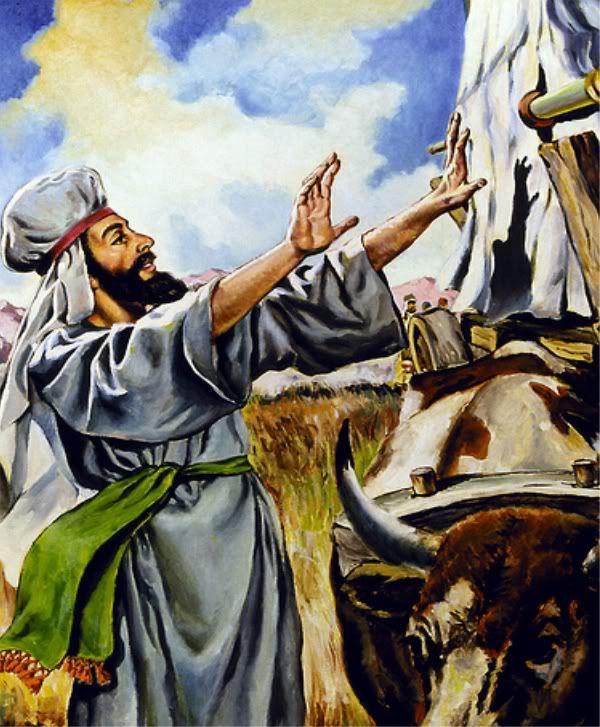
I remembered the unfortunate episode with that poor fellow in 2 Samuel 6. King David had ordered the Ark of the Covenant to be brought into Jerusalem. It was meant to be a joyful celebration. They set it on a new cart but along the road, one of the oxen pulling it lurched. A guy named Uzzah instinctively reached out his hand to steady the Ark and was instantly incinerated. David was understandably upset and confused. Why would God let such a tragedy happen when they were only acting out of good intentions, wanting to honour Him?
A little bit of research revealed what the problem was. David hadn't thought to consult the Scriptures about the right way to handle the Ark. The oxen cart was his own idea. A careful examination shows that he should have got a group of Levites, Kohathites specifically, to carry it with poles on their shoulders. It was a terrible disaster for Uzzah, but just a cause and effect sort of thing. It wasn't as if God had wanted it to happen and zapped Uzzah with lightning from His fingers. Clear directions had been given to divert such a catastrophe, but these had been overlooked somewhere in the archives and ignored.
I told Logan that's why others may seem nervous with the way things are heading. They may imagine a society in which gay pastors and Christian leaders are embraced, those verses are completely swept aside, yet we still feel our main aim is to honour God and attend to His word. Their concern is that one day, we may find out that we've been using an oxen cart.
It's sad to see so many Christians, who all genuinely claim to love God and want to live by His statutes, polarised by issues like this. It may do well for those with more embracing views to consider that instead of branding everybody with these misgivings as intolerant homophobes and haters, we should consider their honest feelings that as we have a Holy Book to guide us, that's exactly what it should do.They may be correct in saying that in no way does the New Testament negate the strong words of the Old Testament on this issue. Being shamed by people who confess their own faith for simply wanting to do the right thing as they see it is a shame.
I'd half expected Logan to say that Uzzah's story has nothing to do homophobia, but he just gave one of those thoughtful, non-committal types of grunts that I recognise, after all the years of living with him. It means that he can concede the point.
A tricky issue indeed, but let's keep our Christian civility intact, no matter which way we happen to see it.
Subscribe to:
Posts (Atom)