Tuesday, September 3, 2013

We are not moving forward but 2000 years backwards


I recently finished reading a novel in which the hero teacher was fired by the headmistress because he wouldn't stick to the curriculum guidelines set by the education department, but deviated from the plan for individual students based on their interests and ability levels. This was deemed unacceptable, even though his classes of former rebels always produced fantastic results. Bureaucracy gone mad.

Crazy bureaucratic policies aren't limited to work of fiction. They crop up in life every day. Centrelink hires a staff member especially to tell people in the queue that they only take queries by telephone nowadays. You have to wait on hold for 45 minutes to have your small question answered in a few seconds. Crazy. A little child dies of anaphylactic shock because the staff can't find his epipen, although the identical epipen of another student with a similar allergy is on hand. But they aren't authorised to use that one. Not just crazy but needlessly horrible and tragic. People every day are accused of racism, sexism and all sorts of motives far from their hearts when they make innocent comments or social gaffes. Come on, people, show a little grace. At the TAFE campus my husband attended, a couple of young guys were summarily expelled simply for wolf-whistling at a girl. Boys used to do far worse than that to me in the 80s, without even getting a reprimand. Where do you draw the line? Or isn't there a line to draw anymore, because it would be lost in the ridiculously stringent lines bureaucracy are drawing themselves?

I'd be scared to venture out in the corporate world or workplace because there are so many rules to keep track of, such a lot of politically correct nuances I'd be nervous to accidentally break. It's beginning to remind me very much of a system that was set up in Israel around 2000+ years ago. We give derogative laughs when we hear some of their extremes, but aren't we heading in a scarily similar direction in the 21st century? Theirs was called Phariseeism.

I guess you might say the biggest difference, is that their system was based on religion while ours isn't, but hold on, doesn't ours infiltrate the whole of society, including the sacred Christian sanctuaries you might think shouldn't be touched? Yep, sadly, crazy bureaucracy is seeping into Christian places too, necessarily they say.

Several years ago, I attended BSF (Bible Study Fellowship) down in the city with my mother and Primary School aged children. I'd been happy with my class at Stirling closer to home but ventured down from the Hills because I heard they had an excellent children's program at Norwood.

One evening, we navigated the traffic well and arrived about twenty minutes early. My 6-year-old saw some of her friends already in their little classroom, playing games of hang man on the blackboard and jigsaw puzzles on the floor. They were the children of the teachers and discussion group leaders, who had to be there early each week. Being as enthusiastic and friendly as she still is, Emma ran in to join them, and the other children were pleased to see her.

One of the regular teachers, who was supervising this free time, came and tapped my shoulder. "You'll have to take her out. Only the children of leaders are allowed in here before starting time." I'd put it to you that this example of protocol gone rampant is not an example of Christian love. Having to fetch Emma out of there because she wasn't allowed to play with her friends for another 10 minutes might not seem a big deal to some, but being a sensitive soul, it stung and hurt me enough to have to blink back my tears. Especially when she was confused and miserable about having to sit, twiddling her thumbs instead of joining her friends.

Interestingly, our time with that particular BSF group ended due to another bureaucratic reason. I got a phone call from the lady in charge, telling me that because my older child, Logan, has a peanut allergy, they no longer had a place for him. "We don't have a proper procedure set up for that sort of emergency."

I said, "But we have our own procedure set up. I carry an epipen everywhere. And you never give the kids snacks anyway, so I can't see that it would ever be a problem."

"Just the same, without a policy in place, we feel the easiest thing is to tell you that we'd rather Logan didn't attend from now on. But Emma is still welcome in the younger class."

Well, you mean, she's welcome as long as we don't arrive too early. "That's OK, your phone call has helped me to make a clear decision. None of us will be coming anymore."

Sometimes I've thought we might have even had grounds for taking this further, if we wanted to. It's got a bit of a Current Affair sort of a tang to it, don't you think? "Young boy is denied the chance to attend Bible Study because he has a peanut allergy." Surely that's some sort of 'ism' on their part. Then it occurred to me that we wouldn't want to get sucked in to the world of craziness, playing the same game and getting all bureaucratic on them. We didn't care to find out, and the truth was, Logan wasn't all that upset about having to leave.

It's such a shame when things done in the name of Jesus must bow to this type of bureaucracy. When I wonder how he might have taken it, I think I can make a reasonable guess. Do you remember what happened when he healed the man with the withered hand in the synagogue on the Sabbath? The Pharisees put on a big song and dance because he did the healing on the wrong day. He told them in effect, "The Sabbath was made for man, not the other way around. Stop your ridiculous carry on and just be glad that this man who God loves has been made whole."

As a helper in Sunday School, I was just given a Child Safe Environment Policy to read through. You can't give piggy back rides or have little ones sit on your lap. Nor can you give a child a small, impromptu gift. The only physical contact you can make is from knees down or on the arms and hands. Pats on head and High Fives are fine, but not play wrestling or tickling. Although I wouldn't dispute any of this, it's a bit sad to think of somebody having the need to sit there and write it all out, and equally sad to think of someone who innocently forgets and breaks one of these breaches having to be reprimanded. But the world of bureaucracy demands that this must be so. It's the world we live in, so we have to attend the meetings, sign the forms, say the right things, do our best to keep abreast of it all.

Yes, even though it's all about Jesus, I can't imagine him tapping anyone's shoulder to say, "Your little girl isn't allowed in with her friends until the big hand of the clock is firmly on the twelve."

Wednesday, August 28, 2013

that I've got to get out of that river


OK, this blog post may appear long, but I'm sure you'll get through it in a flash. It's like a stream of consciousness, which is funny, considering the subject matter.

I've just returned home from visiting Cairns with my daughter and younger son. It was so great and relaxing up there. Even though we were physically doing lots of active stuff every day, I had plenty of time to reflect on the direction my life seems to be heading. The quietness and idyllic rainforest surroundings were perfect for that, especially when I was sitting on the fourth floor balcony of my sister's apartment in the mornings and evenings. I realised there's a deep current of sadness and frustration associated with my life back home that has me trapped in its tendrils like some deep river plant, sucking the life blood out of me, making me loath to return. I had to examine it to figure out where it was coming from, since many aspects of my life are good. It didn't take me long to work it out.

All writers, especially of fiction, are told repetitively that unlike the old-timer authors of the classics we admire, our job in the twenty-first century is far more complex. We can't sit back and expect our publishers to do it all for us. Nor can we expect publicists and promoters to help, unless we pay them a hefty fee. We have to tackle the business of P.R., promotion and business skills, all in the name of making our names prominent and getting sales for our books.

Yes, it's this that makes me feel as if I'm sitting in a canoe, using all of my strength to paddle against the current, lucky if I stay in one spot let alone make any progress. I know that if I stop to catch my breath, I'll be swept toward a steep precipice with a great waterfall, like Barron Falls, the one Emma, Blake and I just saw in Queensland from the Sky Rail and Kuranda train. Then I'll be swept over to disappear from sight and be wrecked at the bottom.

God knows I've been facing that current all my life. I'm not as good at paddling these particular rapids as other rowers are, but I've been trying with all my might. I've been taking the advice of books I've read, trying to set up book signings, talks, appearances with many people who aren't really all that interested in what fiction authors are doing. "We'll call you if we're interested," they say, and many never do. I've set up stalls at various events, trying to catch people's eyes with a broad smile and sell them on my books, which they had no idea existed five minutes earlier. I've contacted media to organise fleeting little newspaper articles. I've painstakingly tried to work out the best words for catchy press releases, titles, blurbs and announcements. I've made frequent little announcements on social media, just trying to remind people that my books are good, which involves being careful to work out whether I'm coming on too strong. I've tried to do all this with the intention to make buyers want to purchase my books for their sakes rather than to help me out, which involves salesmanship. I've been vigilant to search for other avenues such as guest blog posts and free giveaways. I've examined other promotional websites which have been drawn to my attention. With the help of my husband, I've tried to set up an interesting website of my own. All these things are my way of taking large strokes with my oars.

I've had to listen to plenty of well-meaning advice from spectators, lots of it edged with reproach. "You're not staying in the race properly. Look at all those authors who are far out ahead of you." Yeah, well, there are more quality athletes at this game. Some of them even thrive on all this. It doesn't mean I'm not still doing my very best. "You don't have the right sort of equipment to be rowing on this river. Your personality is that of an introvert." I know that, but if I stop paddling, who's going to do it for me? "You're losing ground. Back in 2000, Christian bookstores helped you sell 2000 copies of Picking up the Pieces. Now you'll be lucky if Koorong are willing to take 10 copies of your books. The falls used to be way further back and now they're just behind you." I know, I know, but with the emergence of eBooks, you never know what might happen. I have to keep paddling. "You're staying in the same spot. Your number of reviews on Amazon haven't changed for months now." That's why I have to keep paddling hard to keep ground. But boy, my muscles are getting tired.

Over the years, the scenery along the river bank has changed a bit, but the main topography is pretty much the same. Instead of the massive cliff of Christian bookstores to row past, there is now the challenge of getting Amazon sales among millions of other eBooks. That involves figuring out the perfect key words in categories and keeping track of sales. Equally daunting terrain and treacherous mountains.

So that's the sort of course I've been rowing. It took twelve days of lying on the bank for a short rest to make it obvious that it's really getting me down. During that time, whenever I logged on Face Book, I noticed my friends all still doing the rowing game as hard as they can. I feel very loath to get back in my canoe and pick up my paddles. My fingers cramp up and my hands have got blisters of RSI and strain. My bottom is sore from the narrow little seat. My spirit is broken, crying out, "Please don't make me climb in there again."

I have to consider its pleas as I step back into my old life at home. I have files of pictures and words urging me to never, never, never give up, and that rewards come to those who press on. I've kept my focus firmly fixed on them for all these years, but my holiday forced me to wonder if setting my face to get back on with it all is really the right thing to do on all occasions. Is it worth climbing back on board the canoe, at the expense of my happiness?

Say this life ends when we're somewhere between the ages of 80 and 100. I'm already approaching the middle, having devoted the best of 40+ years to this dream and this rowing course. Way back in school I declared that a writer was all I wanted to be. Can I really go on though, when it means keeping this deep sadness and anxiety rooted? I have nowhere to go when I do scramble up on the bank, but pull myself out I must. I can't stay in that water any longer. I'm weary. I don't have the Olympic quality which I see in others. At least it won't be much of financial setback to take a break, when all I've ever earned has been virtually nothing.

I'll still be sticking my feet in to paddle, of course. I love writing too much not to. If you want to, you can still keep track of me. I love maintaining this blog. I'll still dabble with promotional opportunities without getting all intense and burned-out about it. For example, we want to get my Quenarden fantasy series ready for Amazon kindle.

The thought of settling to be a spectator instead of wanting to shoot for the moon terrifies me. I'm well aware that a funny paradox has happened. In a way, continuing to paddle against that strong current in my canoe feels more like 'going with the flow' than climbing out will be. I really need a fresh change in my life. If something is wrong, you have to fix it. Is it a cop-out to want to climb out of that canoe? It feels more like a brave, blind step of faith than a wimpy move at this stage. But I don't know what will be on the bank.

Saturday, August 10, 2013

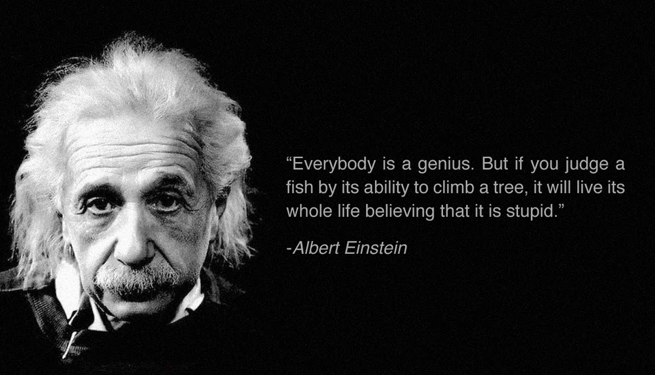
that I think better than a genius

I always thought of myself as a normal sort of a person with strengths and weaknesses. I think I can tell a pretty good story because I love my books, but I'm thick in other ways. I feel confident at reading character but would certainly flounder in a Year 12 Maths or Physics exam.

I was reading a book called "Outliers" by Malcolm Gladwell, and a few chapters suggested that geniuses who soar sky-high in IQ tests often have limitations of their own. A crowd of intellectual students were once given the sort of challenge they weren't used to, a divergence test. They were asked to name as many functions for a brick and a blanket as they could think of.

Well, straight away, I thought what a breeze that one would be. I'm pretty confident I could rattle off several for either of them. You don't have to hone in on some elusive correct answer. You can come up with any silly thing such as doll's house table (brick) or substitute wrapping paper for a large present (blanket).

Apparently, one student could only come up with the following. Brick - building things, throwing. Blanket - keeping warm, smothering fire, improvised hammock, cover for sleeping. Now, the amazing thing is that this fellow is a prodigy with one of the highest IQs in his school.

So wow, geniuses aren't necessarily creative or imaginative. This guy's sharp brain may be able to grasp all sorts of minutiae that would boggle me, but I'm happy being able to think of 100+ random uses for bricks and blankets. A totally pointless skill to have, maybe, but it could add colour to the world I look at. I can't help thinking how boring it would be if I could solve incredibly twisted mathematical equations but never thought of any plots for possible novels.

Not long ago, my husband and I both did a long test compiled by Dr Caroline Leaf, measuring which of the seven pillars of the brain we are strongest and weakest on. These were the results.

Paula - Linguistic, Intrapersonal (I got even scores on those first two), Musical, Interpersonal, Logical/Mathematic, Kinesthetic, Visual/Spatial

Andrew - Logical/Mathematic, Musical, Visual/Spatial, Kinesthetic, Intrapersonal, Interpersonal, Linguistic.

So if our two brains were to be slapped down on a butcher's marble bench, they would look like similar grey blobs, but little could anyone tell how differently they fire up and work. Once, the two of us did a silly online IQ test and he supposedly came up two points ahead of me, which he teases me about to this day. I used to get mad because, honestly, I thought he was pretty dense in many ways. Our eldest son and I can be laughing over some subtle innuendo, while he's still scratching his head, not getting the semantics. He has to ask me how to spell things and surely wouldn't come up with many ideas for the brick and the blanket. Balderdash is his least favourite game and he couldn't thresh out a blog post or write a book.

However, he's a whiz at remembering directions to places, and returning in a bee-line a second time without having to consult maps. He picks up computing and mathematical concepts in a flash and often has to help me out with computer glitches, which he sometimes says are only glitches in my head. He knows a lot of information about all sorts of things, making him the ideal person to run possible plot twists past, or say, "I dunno, go and ask Dad."

He gives the kids advice like this. "Whenever I come across a word in a novel I can't pronounce, I just call it 'wheelbarrow' and whenever it comes up again, I say, 'Oh, there's wheelbarrow again.' You go and do the same."

But I get myself all flustered over diagrams in instruction manuals, while he hardly needs to refer to them at all. And I'd far rather play Balderdash than Chess or Othello.


The brain is a strange and mysterious organ. When I think of all this, and also how astronomically talented autistic people may be at different fields, I'd hesitate to judge anyone's brain as better or worse than anyone else's, despite the facetious title of this blog post.

Monday, August 5, 2013

She was a tragic princess


Fairy tales are full of princesses whose stories end happily, but reality shows there have been many tragic ones. There was poor Princess Diana, with her marital sadness and untimely death, and Princess Grace of Monaco, who had an equally premature death on the road. Then there was Little Princess Anastasia, casualty of the Russian Revolution, along with her whole family. Further back, there were some of the unfortunate princesses who were chosen by British King Henry VIII to be his wives. But the princess I'm thinking of lived years before any of these. She was Michal, daughter of King Saul in the Old Testament.

We first see her as a beautiful young woman who has fallen in love with David, her brother's best friend. Like many other girls, her head is turned by his heroism, dexterity, good looks and humility. At this point, Michal seems to be luckier than any of the other girls, because she's in the position to win the man. Her father is the king, and he can pull strings, especially when using her fits his plan. You may remember, David won her with one hundred Philistine foreskins.

Then comes the part where she shines as a heroine. When the life of her beloved hero husband is threatened by her jealous, aggressive father, she helps David to escape, inventing the ruse that he's sick in bed.

She gets taken away to be the wife of one of her father's generals, named Paltiel. Then some time later, after King Saul's death, David, now king, decides, "I'd like my wife back" (although he had plenty of other lovely spouses, such as Bathsheba and Abigail).

In Hollywood, this may make a great story. We'd all be cheering, thinking it's just how it should be. The heroine helps save the hero's life and now he has rescued her and they are back in each others' arms. The problem for Michal is that it is no longer this simple. Things have changed.

We see her new husband, Paltiel, following along after the chariot in tears, pleading for his wife back until David's men forced him to turn around. It's easy to surmise he must've been a sensitive guy who was deeply in love with her. Although the Bible doesn't delve into their life together (because after all, David is the main man), I imagine that life with a fellow who was so gutted over her departure may have been mutually romantic and satisfying. Would Michal have returned Paltiel's feelings?

She's no longer the girl who lovingly helped David escape. She's turned tight, bitter and resentful. She stands at the palace window watching him dance at the head of the procession while the Ark is brought home to the city, and feels scorn in her heart. She might have thought, "Look at him, going on about God's goodness. God never helped me or made things turn out well for me." Then she makes that sarcastic comment about how His Majesty has esteemed himself, dancing around like a silly lunatic, scantily clad in front of all the onlooking females. Her feelings for David seem to have changed over the years, reinforcing my opinion that maybe she did love Paltiel.

David rebukes her, saying that he has a right to celebrate, seeing how God rejected her father as king and chose him instead. Then scripture gives the impression that Michal was punished by God for this incident, and remained barren all her life. (I've read the theory that David might have ensured that she had no children, keen to eradicate all of King Saul's bloodline from his own lineage.)

I felt sad for her, because she was obviously in a very dark head space. If anyone had anything to be darkly resentful about, it was Michal. Being used as a political pawn rather than a person, torn from two husbands without her feelings being considered either time. And her beloved brother was dead. I like to think Jonathan and Michal might have been close, in their mutual regard for David way back in those early days in their father's court. If there had been psychiatrists couches back then, she would have seemed a person with a perfect right to lie on one, venting about the others, who were responsible for her bereft state and her deep depression.

I wondered why God didn't do anything for Michal? I wish he had. Those things that happened to her were not her fault. If we know enough to piece her tragic story together from scattered references in the Bible, God would have surely been aware of her plight. Yes, he could've helped her! Why didn't he?

The fact that no divine help seemed to be forthcoming makes me stop to think. What if God is always willing to provide help and comfort, but our attitudes put a wall in front of our hearts, blocking us from receiving it? Surely that snarky comment she made shouldn't have been enough to bring down the punishment of childlessness upon her head. (I can even imagine myself saying something similar, in her place.) But what if that comment was the result of a pressure build-up, just a sign of what she'd been brewing in her heat for a long time? Perhaps it was a sad matter of free will. She'd deliberately chosen the sour attitude behind the cutting comment. She'd nurtured the bitterness, resentment and grief until it was something huge. She might have wrapped it all around herself like a blanket she was loath to shed.

 Arguably, she had a right to cling to all that, but if she thought she was hurting anyone else by doing so, she was wrong. David had his other wives to console him. She was only hurting herself. Insisting on brooding about the past instead of facing the future never seems to bring happiness. Michal called David ridiculous, but maybe she unwittingly made herself pathetic too, becoming something like an ancient Miss Havisham from Great Expectations. I feel very sorry for her.

It would seem Princess Michal was not a person like Victor Frankl or Corrie ten Boom. They made the choice to forgive the perpetrators of their grief and move on into a clear future. They didn't deny their terrible memories but allowed them to make themselves better and stronger. Frankl and ten Boom were more like coffee beans, while poor Michal was more like an egg. Boiling water softened and brought goodness and flavour out of them, while it hardened her. Michal was a person who set her mind to believe that God didn't see her or care about her, and that attitude helped make it seem real for her.

Hers is not the happiest story in the Bible and I guess the best way to honour her memory, if we feel sympathy for her, is to keep a guard on our own attitudes, which are so easy to creep up on us, as Michal's did on her. As Victor Frankl said, no matter how desperately things may appear or actually be, we always have the ultimate freedom to choose our attitude.

Here's a post about another brooder, who probably even rubbed shoulders with Michal. This young guy had issues
And this one is about another young man who had a good attitude. Do the right thing just because it's the right thing. 

Sunday, July 28, 2013

Perfect things aren't always easy to swallow


Several weeks ago, we had a lovely visit to Victoria. On one outing, I asked my husband to follow a sign that promised perfectly balanced spring water straight from the depths of the earth. He doesn't always go along with spantaneous whims, but this time he did. We drove for miles down a country track full of virgin Australian bush and fearless animal life. Just when we were thinking of turning back, we found ourselves in a deserted car park with a hand pump. We figured that was what we'd come to see.

The rusty metal plaque on the pump's base confirmed how ultra-healthy the water is. It contains the perfect balance of minerals for the ideal health tonic. I wanted to get straight into it, having images of people from the Regency era flocking to Bath  and other spa towns for similar restorative water.

We had to prime the pump several times. Just when we were beginning to think nothing would happen, a trickle appeared, and soon a torrent gushed forth. We filled a bottle which I offered to the kids first. I watched Emma's and Blake's faces change as they took their sips. Something about the way they said, "Mum, it's really nice water," seemed a bit fishy. As I brought the bottle up to my lips, they burst out laughing.

The stink alerted me first. It was like sulphur, rotten eggs or what I'd imagine smoke from a dragon's nostrils to smell like. The flavour was bitter and very metallic. I couldn't take a proper sip but just wet my lips. I hope not to offend anyone here, but our little boy liked this analogy - it was like a robot passing wind.

Even knowing how healthy that water is supposed to be, we couldn't force ourselves to drink much. Our taste buds rebelled. Emma thought she'd like to take a bottle home to her best friend, for a joke, but the sediments in the bottle turned crazy shades of colour and I began to dread the whiffs when we opened the lid. We tipped it out back at the caravan park, thinking that if we aren't allowed to take fruit back into South Australia, I wouldn't want to take that either.

It's been on my mind. A beverage that's supposedly so perfect, it's unpalatable. I've heard of similar things in nature before. The durian fruit is said to be wonderfully healthy, but its stench wafts out the sweat pores of those brave enough to eat any. I wondered if this observation is the same with perfect people? Are they hard to swallow?

That seemed to be a silly thought. Surely the more perfect people are, the more they must be well-loved by everyone they come into contact with. Look at Jesus, who many of us declare is the only truly perfect person who ever lived. Straight away, I saw not everyone in his time thought he was perfect. He offended some and confused others. Some of the words people probably used to describe him were abrasive, elusive, confrontational, deluded, a stirrer. Many left in droves, shaking their heads and muttering that his teachings were too hard to swallow. He ended up getting himself crucified by people who reacted to him as we did to that water. If he returned to earth, he'd probably get the same reaction from many people, because humanity doesn't change.

Then I thought about other renowned people we may think as close to perfect as possible. How about Mother Teresa? She was a legend. Yet, photos reveal the toll her lifestyle took on her in her stooped shoulders and weather-beaten, wrinkled face. It seemed that majoring on one area of her life detracted from another area which many celebrities think is extremely important for perfection. She didn't have the time, means or inclination to go to beauty parlors or cosmetic surgeons. And maybe many who do these things, do so at the expense of other areas of their lives. Perhaps the fictional perfection of Barbie, whose cartoon movies show her to be super beautiful, generous and good in one package, is less accurate. In reality, personal goodness (and everyone is different) may not always be what we think easy to swallow.

So is being well-loved by everyone we come across a reliable gauge that we are closer to 'good' than 'bad'? I used to think so but now I think differently. So many heroes through history had moments of being severely criticised for their choices and habits, which many now applaud. When we're making waves, or at least a few ripples, and some people are mumbling about us, this is not necessarily a sign that we're getting off track, but maybe a clue that we are right where we are meant to be, doing what we are meant to be doing.

For authors like me, if our books get some low reviews, that doesn't mean that the stories aren't just how they are meant to be. Maybe when a few others find us hard to swallow, it may show that we are on the right track with our callings. Whatever it is that you do, consider that when a few people react unfavourably to you, it doesn't mean that you are not in the perfect place, doing the perfect thing for you.

Thursday, July 11, 2013

That Mary is still being shamed and criticised by Martha


I've seen lots of literature urging Martha-like women to slow down and be more like Mary. It seems to me, because these books are so prolific, there must be far more Marthas in the world than Marys. At least their activity thrusts them more in the limelight. Hard-working, self-sacrificing ladies who see just what needs to be done, plow ahead and do it, then crash in their beds each night. They sometimes snap with exhaustion and sob, "I'm doing all this good work and nobody even appreciates it. Look at her, doing nothing. I'm burned-out and fed up. If anyone deserves to have a nervous breakdown, it's me." I imagine those in the medical and counselling professions may be burned-out too, from being inundated with these Marthas as clients.

Well, today I'm here to talk from the other side. I always identified more with Mary in the first place. I'd be the one with my nose stuck in a book, busily scribbling notes or trying to figure out how this new idea gels with what I've always understood. All the while, I wouldn't have a clue about all the things that required practical attention around me. I'm the sort of person who needs to ask what I may do to help, because it doesn't pop out at me, as it would to a Martha.

I'm not a good person to have in traditional 'helps' jobs and ministries. This is not because I'm not willing to help but because I often don't tend to notice things that seem to stand out as glaringly obvious to others. I'd be the one to say, "Another working bee? The place looks pretty good to me," while others roll their eyes and my husband comes straight out and say, "You've got to be joking! There's enough work to keep an army going." That's sometimes made me feel really guilty and upset.

I'm the person who gets looked past for any 'important' role, because, of course, I'd be no good. Too dreamy and dithery, like an 'arty' person. I've had that accusation flung at me as an insult more than once. This also, has made me want to retreat into my shell and cry, at times, wondering what I'm good for.

While I never thought I was useful for much, I knew what I enjoyed. That's reading, listening, mulling over ideas, pondering, trying to express something I feel fresh and new. But I've felt a lot of guilt because those things seemed self-indulgent and of no use to anybody else.

I wonder how Mary felt when her sister, at the end of her tether, snapped that famous remark to Jesus. In effect, Martha said, "Can't you see I'm doing everything out here. Please tell her to get off her lazy backside and help me." The Bible says nothing about Mary's reaction to this, but I can imagine how it might have been. If I'd been her, I would've flinched before doing anything else. Then I would've started scrambling to my feet, fully expecting to hear, "Yes, first things first. Your sister needs help. We can save this for later, when the more pressing and urgent things are out of the way." I would've started trying to speak humble apologies, wanting to explain that I genuinely didn't know how badly needed I was, fully expecting the others to scoff, "Oh yeah, that's a good one." The reply Jesus did make would have stunned me.

What I would've found most of a shock was the last part of what he said. "Mary has chosen the better thing and it will not be taken away from her." Hey, what? He didn't say it was equally as important as all the cleany, cooky stuff (to which we may add paper work and whatever else keeps our 21st century heads and hands occupied). He said it was better!

The fact that I've grown up with this sort of guilt complex because of my priorities indicates that there must still be other Marys out there too. I'm certain I'm not the only one.  I think we need liberation as much as the New Testament Mary did. We still live in a world where Marthas are lauded and praised while we are chastised and rebuked. I've read about children with Protestant work ethic type parents who who, on seeing them reading a book, would ask, "Don't you have anything to do?"

We see people parading how busy they are on social media, fully expecting pats on the back, which are sure enough forthcoming. The Marys of the world, represented by people more like me, still contend with shame, feeling belittled, wondering if we're just being lazy, silly and selfish.

I love Jesus' response to Martha because it reminds me, at times, that I'm doing okay. Of course I know that those who don't work don't eat. The Bible is also clear about that. But we need to remember that Mary's default choice, and that of people like me, isn't laziness at all. That's just us taking on the erroneous opinion of all the Martha-types who elevate all that busy work to a high position it shouldn't have. (Hey, I'm not the one who said it shouldn't be highest. Jesus did).

A world without sitting back to reflect, to study the words of Jesus, to read about the opinions and experiences of other thinkers, to try to think and process our own experiences, would be a poorer world indeed. It's not as 'in-your-face' as the Martha-work, but more important. (Once again, I was going to type the word 'equally', but he said it, not me.) I do clean my house and look after all the household members. If I didn't who would? But I don't always struggle to get it out of the way first. A sudden idea to jot down, or a conversation about spiritual or world issues with the kids will come first, even if it is sunny enough to hang another load of washing.

My aim is not to criticise the Martha-mindset of others, but just to encourage other Marys to not let it get us all down. Sure, Martha needed to learn that lesson, but I'm sure her sister did equally. It seems Mary did take it on board, because she had the right understanding and frame of mind to make that lavish gesture of worship later, when she poured the bottle of beautiful smelling lard over Jesus' feet. At least, I've read that attributed to Mary of Bethany several times. If so, I believe she wouldn't have necessarily felt the desire to do this, if she hadn't made getting to know him and ponder his words her priority over cooking and cleaning for his visits.

Mary-ladies, even though our natural inclinations may seem useless, they won't be taken away from us. So anyone who reads this, in the midst of all the Marthas who may be running around and organising as usual, don't forget that several Marys may be feeling equally bad and need their own type of encouraging feedback. Even though Marthas get overloaded with stress and need sympathy and understanding, Marys also need to feel as if we're valuable people and not essentially space-takers.

Wednesday, July 3, 2013

Which of two kings I may be like.


It has sometimes occurred to me to honestly wonder which of two kings I may be most like. They were the first two kings in the history of Israel's monarchy, King Saul and King David. We'd all like to think that we'd be most like David, but is it always the case?

I've got to admit, King Saul's downfall fills my heart with a bit of sympathy. He started off so well. Not only did he attain sudden celebrity status but back in those early days, he seemed to do it in a very humble and courteous way. He was one of the people the Bible bothered to describe as good looking. Not only was he handsome but head and shoulders above most other men. Probably every Hebrew girl's crush, the sort of guy who would be splashed across the covers of many magazines if he'd been alive in a much later era.

When you read through his story, you see that many of his big mistakes had to do with personal relations, keeping up his desire for looking good in front of the people and not slipping in the popularity polls. Without actually having it stated in the Bible, he was one of the first of many P.R. casualties who have crashed and burned.

I think it's good to put ourselves in his place and challenge ourselves to honestly assess whether we might not have at least considered making the same moves in his place. There is the incident in 1Samuel 13, when he was under military pressure and Samuel, the priest, hadn't showed up to make the prescribed sacrifices. With his soldiers slipping away right and left, I can imagine the desperation that urged Saul to say, "Bring the burnt offering and the peace offering!" I can also get his explanation, when he told Samuel, "I was losing my army... you hadn't come when you said you would... I didn't know what to do... the Philistines were about to come upon me and I hadn't asked for God's help, so I took it into my own hands." In fact, if I'd been him, I might have even added, "Where were you, anyway? How about keeping your word and getting here on time?"

Without padding this out with any more examples, of which there were many, we see there was one crucial difference between Saul and David, his eventual replacement. Saul did things to please people and desperately try to hitch up his popularity, whenever he perceived it might be sagging. David's normal motivation was to please God, not people. His Psalms are full of it. Saul sought the gifts, David sought the giver. Saul wanted answers, David wanted the Answerer. Saul wanted to maintain his own reputation intact, David didn't give a fig for all that, if it meant that his relationship with God would be compromised. I want to be a David, but in many ways, Saul is still easy to relate to.

I see him not as a villain but as a promising hero who made wrong choices and spiralled downward. A man who wanted to cling so tightly to the good things he had without losing any of them that he let his judgment and perspective get skewed. A man who allowed the lesser emotions of jealousy, envy, rage and resentment drag him into deep melancholic depression. Then in the end, he reminds me of a little boy who wanted so badly to preserve his ice-cream that it melted in his hand. How sad that the humble young man who was found hiding among the baggage at the beginning of his inauguration became the same man who was busy erecting a victory monument in his own honour toward the end.

I came across these passages from Thomas Merton's letter to a young activist, which make me think of King Saul's deep attitute, which I think is often easy to recognise in ourselves too.

"You are probably striving to build yourself an identity in your work and your witness. You are using it, so to speak, to protect yourself against nothingness, annihilation. That is not the right use of your work. All the good that you will do will come not from you but from the fact that you have allowed yourself, in the obedience of faith, to be used by God's love. Think of this more and gradually you will be free from the need to prove yourself and you can be more open to the power that will work through you without you knowing it."

"Do not depend on the hope of results. When you are doing the sort of work you have taken on, essentially an apostolic work, you may have to face the fact that your work will be apparently worthless and even achieve no result at all, if not, perhaps, results opposite to what you expect. As you get used to this idea, you start more and more to concentrate not on the results, but on the value, the rightness, the truth of the work itself."

Modern author Joan Borisenko, had this to say in a book about burnout. "Here's a thought worth contemplating. People who have the greatest investment in projects and ideas are much likelier to burn out than those who are less attached to the outcome of whatever they're involved in. Although commitment to a cause , a job, your children, may seem selfless and virtuous, there's often an underlying ambition and motivation to prove your importance and worth that predisposes you to becoming fried." 

I sometimes find myself tired out and frazzled, and must admit that when I contemplate this possible reason for it, I often do have to admit a deep desire to impress and an anxiety about the results of whatever I'm doing that makes me feel as if I'm tied in knots. How refreshing, to take on boards the attitudes of King David and Thomas Merton.
Related Posts Plugin for WordPress, Blogger...